
It’s hard to even keep up with the number of major newspapers FINALLY coming around to support the legalization of marijuana. Here’s a brief list. Don’t blink…or you’ll miss (yet) another….
The Oregonian Endorsement
The Seattle Times Endorsement
The New York Times Endorsement – NYTIMES continues to blow minds…


-
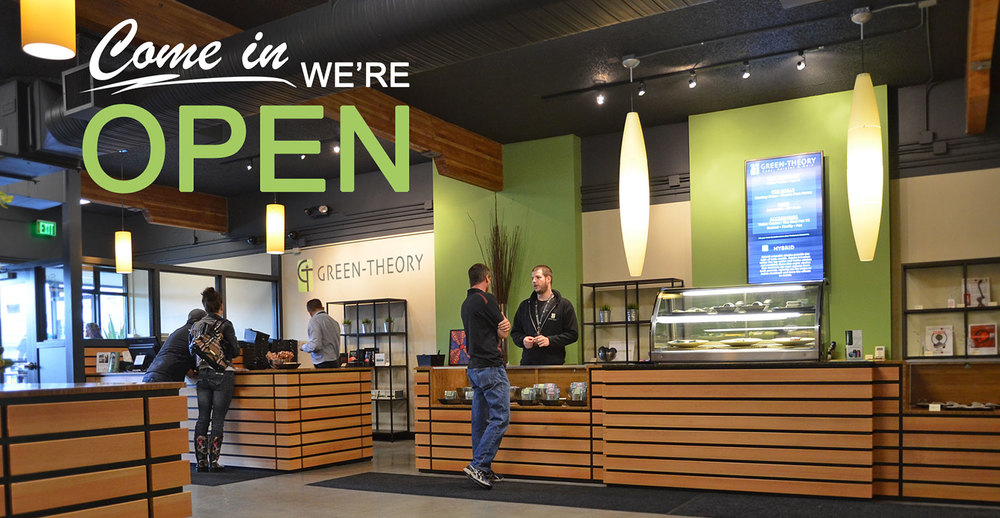
The HIGHest-End Marijuana Store in the World
Though cannabis is constantly in the news, very few people have actually been inside a legal recreational store. We went to Green-Theory, a high-end marijuana shop a few miles from the Microsoft campus. Here’s what legalization – and the future of weed – looks like!
-

Never Fear, The Pot Will Appear: Everything You Need to Know About Washington’s Recreational Roll-Out
The moment in history has arrived – enabling citizens to walk into a store and LEGALLY buy a bag of marijuana! But hold on a sec…
If there’s any way you can wait a few days to buy your legal weed from a recreational store in Washington State, you should. Seattle’s first retail pot shop, Cannabis City, is going to be a mob-scene when the doors open at (high) noon – and then they’re gonna run out of marijuana. The same will be true with the other 23 stores given retail licenses by the state today.
Though Washington State made weed legal a year and a half ago with the passage of Initiative 502, it’s taken some time to fine-tune the details. State agencies have had to vet growers, deal with inspections (now there’s a fun job!), quarantine herb before it could be shipped, and grant licenses to retailers who then had to install security cameras, tinted windows, pot-tracking software(!) and hopefully a Slurpee machine! (Imagine if they ran these kinds of background checks for folks trying to buy firearms!)
Right off the bat, there will be extremely limited supplies for ganja, as only 79 growers got the permits (from over 7000 applications!), and most those harvests won’t come in until late this month. So if you were looking forward to the PowerPurpleKushBerryCrunch that won the Cannabis Cup, yer gonna be waiting a bit longer. But hey – all good things are worth waiting for – besides, that SuperChronicHydroponic stuff will put you on the couch for days on end. Moderation, man! Prices will start high (up to $400 an ounce – ouch), but like Teslas, Furby dolls and the Galaxy S5, come down over time. Besides, would you rather pay $25 for a legal gram, or go black-market style, potentially rooming in the tank with Big Bubba while funding Mexican cartels and an over-crowded and money-sucking prison system?
Oh – and those Reefer’s Peanut Butter cup brownies you were so excited to try – that ain’t gonna happen anytime soon either. No edibles have so far been given the green light in Washington, as the process for licensing kitchens has been painfully slow. (Part of the debate has been a good one, with lawmakers wishing to make sure THC-laden edibles and sodas are not targeted to kids and that labels are clear enough even for Maureen Dowd to understand.) While I like the idea of child-resistant packaging, it’s hard enough for non-stoned adults to open a damn aspirin bottle, so I do hope they don’t make things too difficult…
Within a month or so, things will be running as smooth as the cool-kids have it goin’ on in Colorado, with varied and plentiful products, and more tax dollars than ever to blow on items like roads, infrastructure, and, hopefully, drug education and teacher’s salaries. Unlike Colorado, a major hurdle in Washington that has never been addressed is the way medical marijuana dispensaries will be treated. As of now, the myriad of retail regs are not being applied to these long-standing dispensaries, causing hell and havoc for many card-carrying marijuana patients who are truly in need and benefit greatly from the medicinal uses of weed.
The good news for those who do have marijuana cards – the strange gray-area they currently reside in allows them to purchase edibles of all-kinds – including licorice chews, gourmet chocolates and marijuana-infused hard candies. Not that I’ve tried any…
When it comes to the marijuana movement, it’s important to keep the mellow in mind, and visualize the Big Picture. As of this very moment: two States have legalized weed, and 20 more are scheduled to vote on the issue in the next two years. Like marriage equality, it’s going to happen – we just need the naysayers, Bible-thumpers and right-wing fundamentalists to come to their senses or, more likely, succumb to the will of the people – and the democratic process.
-

weedWatch Parody of Apple Watch Advocates “Time for a Change”
“weedWatch” Parody of Apple Watch Advocates “Time for A Change”FOR IMMEDIATE
RELEASESeattle, WA – Coinciding with the marijuana holiday 420 and the release of the Apple Watch on April 24th, a Seattle-based multi-media company, Higher Ground, has created a parody ad to bring attention to marijuana legalization. The ad (“WeedWatch”) features a photo of the iWatch with the simple text, “Time for a Change: Legalize It.” A variety of marijuana-related icons and apps are featured on the device’s face.
One of the most innovative features of Apple’s Watch is the ability for users to customize the face of the device, and add additional information. In Higher Ground’s parody, they have taken the liberty to do just that! The watch face is full of humorous and advocacy-related apps including NORML (National Organization for the Reform of Marijuana Laws), SXSW, Leafly (a Yelp-like mobile app for marijuana), 7-11, Cannabis News Network, and Doritos. The time? 4:20.
“The Apple Watch is a revolutionary product, and the legalization of marijuana in States across the country is also a revolutionary movement,” notes Higher Ground Editor-in-Chief Michael A. Stusser. “The message of our parody is as simple as the solution to the War on Drugs: Legalize It. It’s time to end Prohibition, and legalize, regulate and tax cannabis at the federal level.”
Based out of Seattle, where recreational marijuana was legalized in 2012, Higher Ground is attempting to “Elevate the Dialogue” and broaden the movement nationally. While legal in Washington, Colorado, Alaska and Oregon, the use, sale or distribution of cannabis is still a felony at the federal level, and over 600,000 Americans are arrested every year for marijuana-related offenses. The parody ad is being strategically placed in weekly newspapers (and on-line) in states where marijuana initiatives are being proposed, including Ohio, California, Nevada, Maine, Michigan, Massachusetts and Arizona. It will premiere as a full page ad in the Marijuana Green Pages.
The launch of the Apple Watch continues to garner significant media coverage, as it is the first new product device from Apple since CEO Tim Cook took over the company. PreOrders for the iWatch began on April 10th, selling over a million units, and will begin shipping on April 24th. Using guerilla-style marketing, Higher Ground’s WeedWatch campaign will appear on posters, leaflets and mobile billboards adjacent to Apple stores nationwide.
ABOUT HIGHER GROUND
Higher Ground produces the world’s first satirical news program about the legalization movement, along with a newspaper column and website. A multi-media company, Higher Ground creates highly-produced video assets including a flagship program (a mix between The Daily Show and CNN, just without that annoying Wolfe Blitzer fellow), a syndicated column on the legalization movement, a comprehensive and entertaining news website, events (Cooking with Cannabis!), along with viral social-media parodies.
Higher Ground has created a variety of videos and parodies that attempt to vaporize stoner-cliches (including a ReMix of Cheech & Chong’s iconic “Up in Smoke”), while also educating the public on the changing landscape of legalization. Along with their YouTube videos, the company has repurposed posters from the Reefer Madness era with an Original Artists Series, updated MadMen (whose characters smoke from vaporizers instead of cancer-sticks), and even crafted a Seattle Seahawks logo entirely out of marijuana in honor of the Beast Mode strain (named after running back Marshawn Lynch). Stusser’s Higher Ground column also runs in the Seattle Weekly.
Higher Ground explores and celebrates the elevated aspects of getting high. Founded during a revolutionary time of economic and spiritual transformation in the legalization movement, the brand will document and chronicle this incredible time in our history, and advocate for the legalization of cannabis (along with civil rights, gay rights, and human rights), and embrace the end of – yet another – prohibition.
For more information, contact Michael Stusser at michael@michaelstusser.com###

Comments are closed.