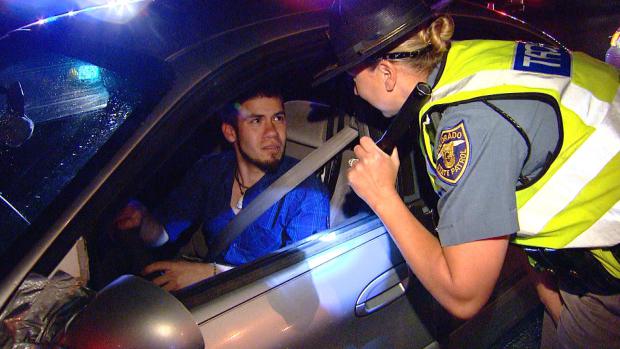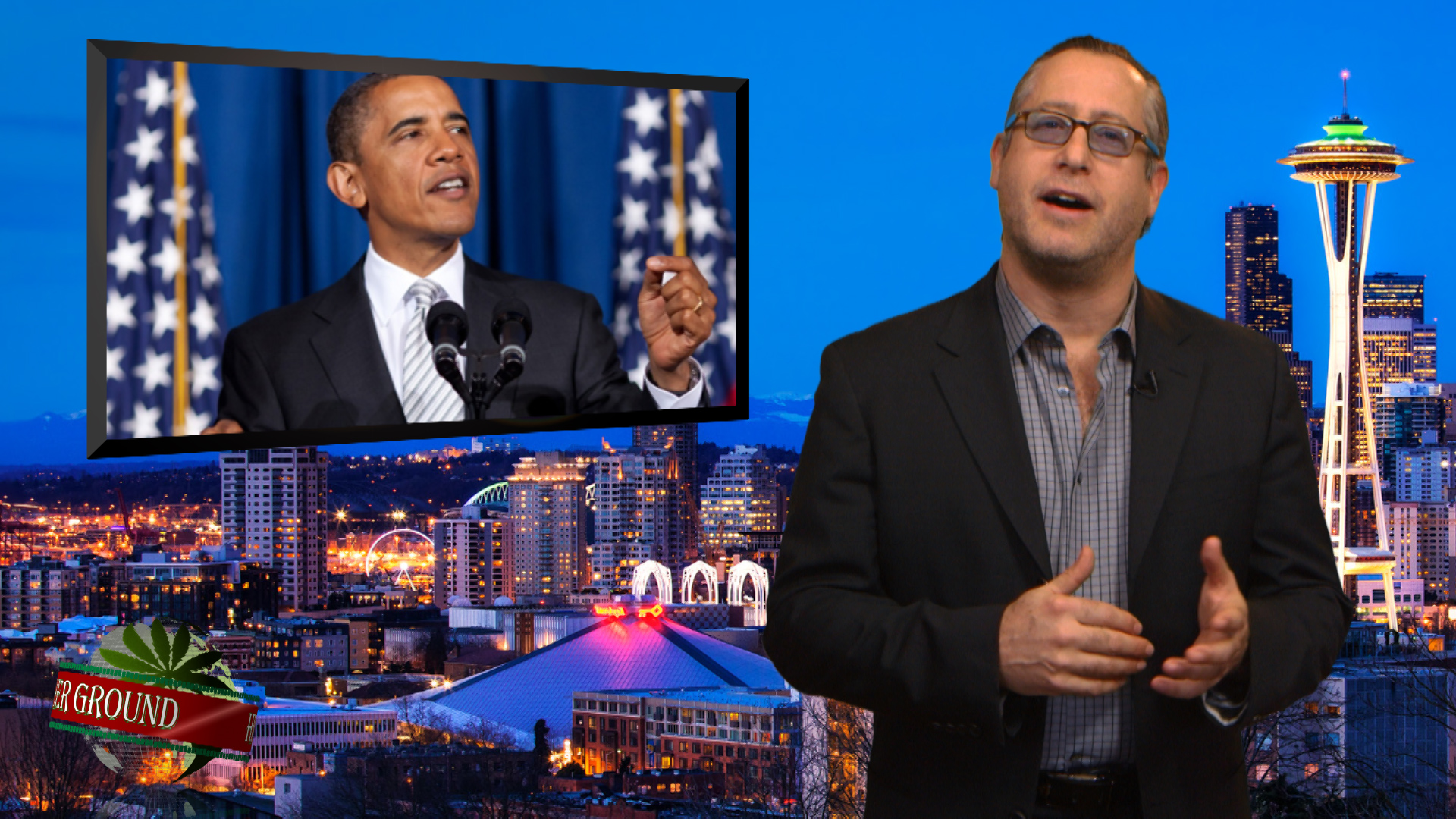
CNN reporter Randi Kaye does the best job showing America what retail weed stores will look like that we’ve seen on Higher Ground. She also gets a hilarious contact high from being “hotboxed”in a Cannabis Tourbus.
You Might also like
-
Never Fear, The Pot Will Appear: Everything You Need to Know About Washington’s Recreational Roll-Out
The moment in history has arrived – enabling citizens to walk into a store and LEGALLY buy a bag of marijuana! But hold on a sec…
If there’s any way you can wait a few days to buy your legal weed from a recreational store in Washington State, you should. Seattle’s first retail pot shop, Cannabis City, is going to be a mob-scene when the doors open at (high) noon – and then they’re gonna run out of marijuana. The same will be true with the other 23 stores given retail licenses by the state today.
Though Washington State made weed legal a year and a half ago with the passage of Initiative 502, it’s taken some time to fine-tune the details. State agencies have had to vet growers, deal with inspections (now there’s a fun job!), quarantine herb before it could be shipped, and grant licenses to retailers who then had to install security cameras, tinted windows, pot-tracking software(!) and hopefully a Slurpee machine! (Imagine if they ran these kinds of background checks for folks trying to buy firearms!)
Right off the bat, there will be extremely limited supplies for ganja, as only 79 growers got the permits (from over 7000 applications!), and most those harvests won’t come in until late this month. So if you were looking forward to the PowerPurpleKushBerryCrunch that won the Cannabis Cup, yer gonna be waiting a bit longer. But hey – all good things are worth waiting for – besides, that SuperChronicHydroponic stuff will put you on the couch for days on end. Moderation, man! Prices will start high (up to $400 an ounce – ouch), but like Teslas, Furby dolls and the Galaxy S5, come down over time. Besides, would you rather pay $25 for a legal gram, or go black-market style, potentially rooming in the tank with Big Bubba while funding Mexican cartels and an over-crowded and money-sucking prison system?
Oh – and those Reefer’s Peanut Butter cup brownies you were so excited to try – that ain’t gonna happen anytime soon either. No edibles have so far been given the green light in Washington, as the process for licensing kitchens has been painfully slow. (Part of the debate has been a good one, with lawmakers wishing to make sure THC-laden edibles and sodas are not targeted to kids and that labels are clear enough even for Maureen Dowd to understand.) While I like the idea of child-resistant packaging, it’s hard enough for non-stoned adults to open a damn aspirin bottle, so I do hope they don’t make things too difficult…
Within a month or so, things will be running as smooth as the cool-kids have it goin’ on in Colorado, with varied and plentiful products, and more tax dollars than ever to blow on items like roads, infrastructure, and, hopefully, drug education and teacher’s salaries. Unlike Colorado, a major hurdle in Washington that has never been addressed is the way medical marijuana dispensaries will be treated. As of now, the myriad of retail regs are not being applied to these long-standing dispensaries, causing hell and havoc for many card-carrying marijuana patients who are truly in need and benefit greatly from the medicinal uses of weed.
The good news for those who do have marijuana cards – the strange gray-area they currently reside in allows them to purchase edibles of all-kinds – including licorice chews, gourmet chocolates and marijuana-infused hard candies. Not that I’ve tried any…
When it comes to the marijuana movement, it’s important to keep the mellow in mind, and visualize the Big Picture. As of this very moment: two States have legalized weed, and 20 more are scheduled to vote on the issue in the next two years. Like marriage equality, it’s going to happen – we just need the naysayers, Bible-thumpers and right-wing fundamentalists to come to their senses or, more likely, succumb to the will of the people – and the democratic process.
-
THE TIDE HAS TURNED
Great article from Josh Voorhees, our favorite SLATE contributor
Courtesy of Slate –
An overwhelming majority of Americans believe that the legalization of marijuana is inevitable. We’ll soon find out if they’re right.
Voters in Alaska and possibly Oregon will decide this November whether their states will join Colorado and Washington in legalizing the commercial sale and recreational use of pot. Similar initiatives are at varying stages in more than a half-dozen other states—Nevada, Arizona, and California among them—where advocates are looking toward 2016, when they hope the presidential election will turn out enough liberals to push those efforts across the finish line. All told, more than 1 in 5 Americans live in states where marijuana use has a legitimate chance to become legal between now and when President Obama leaves office.
It’s not just at the ballot box where the pro-pot crowd is putting points on the board. Lawmakers in at least 40 states have eased at least some drug laws since 2009, according to a recent Pew Research Center analysis. According to the Marijuana Policy Project, proposals to treat pot like alcohol have been introduced in 18 states and the District of Columbia this year alone. Meanwhile, 16 states have already decriminalized marijuana, according to the pro-pot group NORML—Maryland will become the 17th in October. In large swaths of the country getting caught with a small amount of weed at a concert is now roughly the same as getting a speeding ticket on the way to the show. While not leading the charge, the Obama administration is allowing states the chance to experiment. The feds have given a qualified greenlight to Colorado and Washington to dabble in recreational weed, and have even taken small steps to encourage banks to do business with those companies involved in the quasi-legal pot trade.
Given this momentum, it’s not difficult to see why 75 percent of Americans—including a majority of both those who support and those who oppose legalization—told Pew pollsters in February that they now believe it’s a matter of when, not if, the nation’s eight-decade-long prohibition of pot ends. The question is: Are they right?
This moment isn’t the first time that the United States appeared on the cusp of legalization. After steep gains in popular support during the early and mid-’70s, support for legalization climbed to 30 percent in 1978, only to plummet back into the teens the following decade as Baby Boomers became parents and Jimmy Carter’s pro-decriminalization administration gave way to Ronald Reagan’s war on drugs. “This was supposed to be inevitable then,” says Kevin Sabet, a legalization opponent and former Obama drug policy adviser who helped found Smart Approaches to Marijuana after leaving the administration. “No one could have predicted that [support]would have been wiped away so quickly.”
The pro-pot crowd isn’t ready to declare victory either. Ethan Nadelmann, who heads the Drug Policy Alliance and has spent decades in the reform trenches, says he’s of two minds when he thinks about the future. “On the one hand we have this extraordinary momentum,” he says. “On the other, public opinion can be fickle and marijuana is not going to legalize itself.”
While such caution is reasonable, it’s obvious that things are different now than they were 40 years ago, when then-record levels of support for legalization were good for little more than a vocal minority. It wasn’t until 2013 that a majority of Americans said for the first time that they supported making it legal to use weed. Support now stands at 54 percent in the most recent Pew poll, 23 points above where the legalization effort stood as recently as 2000 and 13 points higher than in 2010. Even those fickle Baby Boomers are back on board, with 52 percent now in favor—5 points more than that generation’s 1970s-era high. Meanwhile, each passing year brings us an electorate more familiar and less fearful of marijuana.
It’s not just a matter of shifting demographics. There’s also the fact that voters have increasingly gotten an up-close look at state-legal weed in the form of medical marijuana. Twenty-one states and the District of Columbia have legalized pot for medicinal purposes to varying degrees since California became the first to do so almost two decades ago. Voters in Florida are set to decide later this year whether they want to join that group, something that would give advocates their first voter-referendum victory in the South. (Florida law requires at least 60 percent support, however, making it a heavier lift than it has been in other states.)
Some pot opponents warn that medical marijuana serves as a Trojan Horse for the larger legalization movement, but that argument relies on Americans believing that the dangers of possibly legalizing recreational weed tomorrow outweigh the benefits of actually prescribing it to cancer patients and others in need today—a viewpoint shared by a diminishing number of Americans. While 54 percent of respondents told Pew they thought “the use of marijuana” should be made legal, things were more complicatedwhen the question changed from a simple yes-or-no to one where people were asked to pick between three choices: 39 percent said that pot “should be legal for personal use”; 44 percent said it “should be legal only for medicinal use”; and 16 percent said it “should not be legal.” Still, the answers to the original question—“Do you think the use of marijuana should be made legal, or not?”—suggests in an all-or-nothing environment, most Americans choose the former.
Regardless, medical marijuana has already served as stepping-stone for states that have or are considering regulating the sale and use of recreational pot. In Colorado, where retail stores opened their doors on New Year’s Day, advocates were able to point to the state’s tightly regulated medical market, approved by voters in 2000, to allay fears that the state couldn’t regulate a marijuana market from scratch. To date, Colorado regulators have delivered on those promises, building a relatively hiccup-free commercial market on the back of the medical marijuana industry. (Things in Washington, where the medical market is unregulated, have proved a good deal more complicated. Residents are still waiting for the first retail stores to open 19 months since the 2012 vote.)
Medical marijuana has become so relatively uncontroversial that late last month the House of Representatives shocked almost everyone when a bipartisan majority voted to block the Drug Enforcement Agency from pursuing medical marijuana operations that are legal under state laws. “Watershed is probably too strong of a word,” says Nadelmann of the unexpected vote for a bill that had repeatedly stalled in the same chamber for the last decade, “but it was pretty close.”
Legalization in theory is different than legalization in practice, and an unforeseen disaster in Colorado or Washington—be it from the production of hash oil or the next time a New York Times columnist overindulges in baked goods—could always affect public opinion. Colorado Gov. John Hickenlooper, a Democrat who opposed his state’s 2012 legalization initiative, for one, has warned his fellow governors to take a wait-and-see approach to their own state’s legalization efforts. But it’s looking increasingly like the voters may not be so patient if given the choice.